Time isn't money. Time is just time.
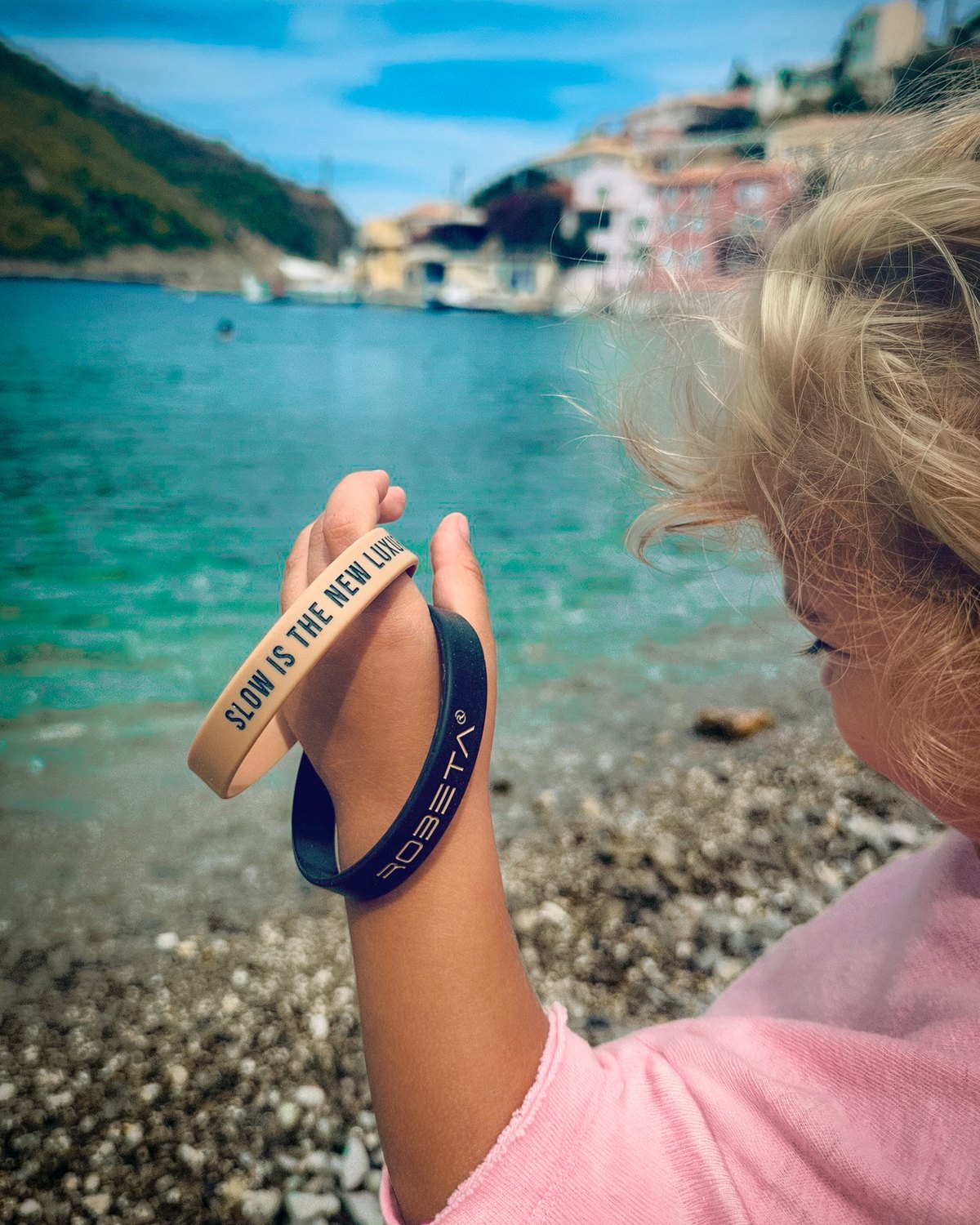
Some time ago I put four words on a bracelet for a client.
SLOW is the new luxury.
I will be honest: I chose them because they sounded good. But a line only sounds that good to you when some part of you already believes it.
I work hard. I always have. But for a few years now I have valued time a little more each year, and nearly everything else a little less. I had the direction. I did not have the words.
I am writing this from a beach in Greece, where nobody needs those four words explained.
Time is money. Somebody famous wrote that nearly three hundred years ago, as advice to a young tradesman. It was good advice for running a shop. The rest of us made it a way of running a life — and after three centuries of getting faster at everything, I have yet to meet one person who has more time because of it.
Here is where the sentence breaks. Money comes back. You can lose all of it and earn it again. Nobody has ever earned back an afternoon. You cannot save it, either. It gets spent regardless, at the same speed, by everyone. All any of us decides is on what.
My daughter is turning three. I can always make more money. I cannot make more of her being three.
Greece never believed the sentence. This country figured out three thousand years ago what the rest of us are still paying therapists to learn — that time isn't money, time is time, and the afternoon is not a problem to be optimized.
They even had two words for time. Chronos was the time you count: hours, deadlines, the quarter. Kairos was the time that counts — the ripe moment, the one that will not come round again. We kept the first; it is in every chronometer. The second we let go, and then wondered where our lives went.
So we surrendered to it. We built sandcastles with the seriousness the work deserved: towers, walls, and bucket after bucket of seawater for a ditch the sand drank faster than we could fill it. We jumped waves again, and again, and one more time after the last one more time — which any parent knows is a number with no end.
And somewhere between the castle and the sea, the clock just gave up. No schedule, no notifications, nothing to be late for. Just a small architect in a swimsuit, ordering the tide to wait — and for a second, I swear it did.
That is kairos. It has never once appeared on a calendar. And I notice it fits me a little better every year.
Most of us visit the life we want for two weeks a year. Then we go home and call the other fifty weeks real life.
I am done visiting. I am building Ānanya to travel these islands slowly, with my family. To work from here — laptop open in the morning, the sea in the afternoon. To stay until we are ready to leave, and not until the booking runs out.
It is not finished yet. When it is, this is what it is for. Not the kilometres. The afternoons.
You do not need Ānanya for any of this. A cheap ferry ticket and an empty afternoon will do the same job. You only need to stop believing the sentence. Your time was never money. It is the one thing you were given outright — and it is being spent right now, at the usual speed, whether you are watching or not.
I put four words on a bracelet because they sounded good.
I am building Ānanya because they are true.
Go slowly.
Ānanya. The world's first GlamperVan.
These letters go out from inside the build — the decisions, the arguments, the things that go wrong. Not updates. Letters.
← Back to Ananya