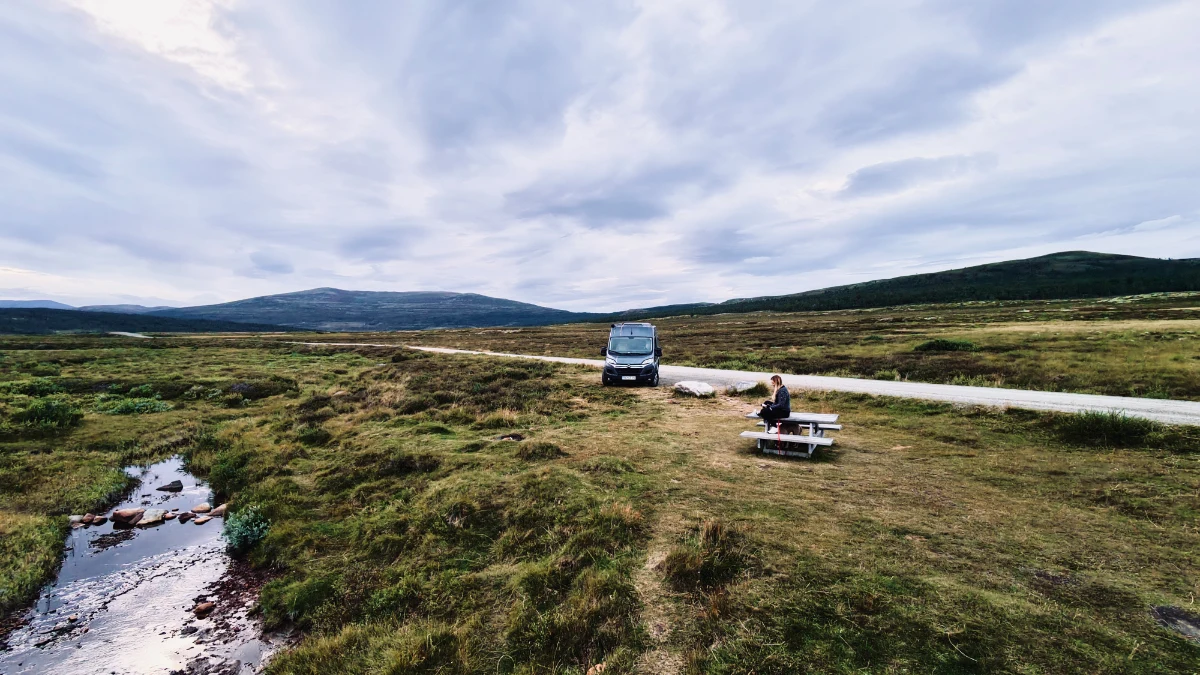
Urša Drofenik, an experienced traveller and mountain biker from Slovenia, has had a tent on the roof of her car for three years. She uses it for weekend trips and for longer holidays in the warmer half of the year. For a journey to the far north, though, she says a campervan is her first choice.
So she set off from Ljubljana in a rented Robeta Helios, alone, with her dog Pega as a faithful companion. She covered almost 9,000 kilometres to the Lofoten Islands and the island of Senja in northern Norway. Here the focus is not on the route but on what the trip taught her about travelling by campervan. If you are still wondering whether a van is the right choice for you, her answers on what worried her, what the campervan gave her compared with a rooftop tent and what she would change may help.
Why a campervan when you already have a rooftop tent?
Urša gives two reasons why she preferred a campervan. The first is the weather. In the north you are at the mercy of it. You can get by in a tent in bad weather, and that is common travel practice up there, but with a campervan there is more comfort, she says. You have a kitchen with a fridge, a bathroom and a bed you do not have to worry about getting wet and cold.
The second reason is her job. Urša can work remotely, so the campervan was not only a home on four wheels but also a mobile office.
“A campervan is, in the truest sense of the word, both a car and a home.”
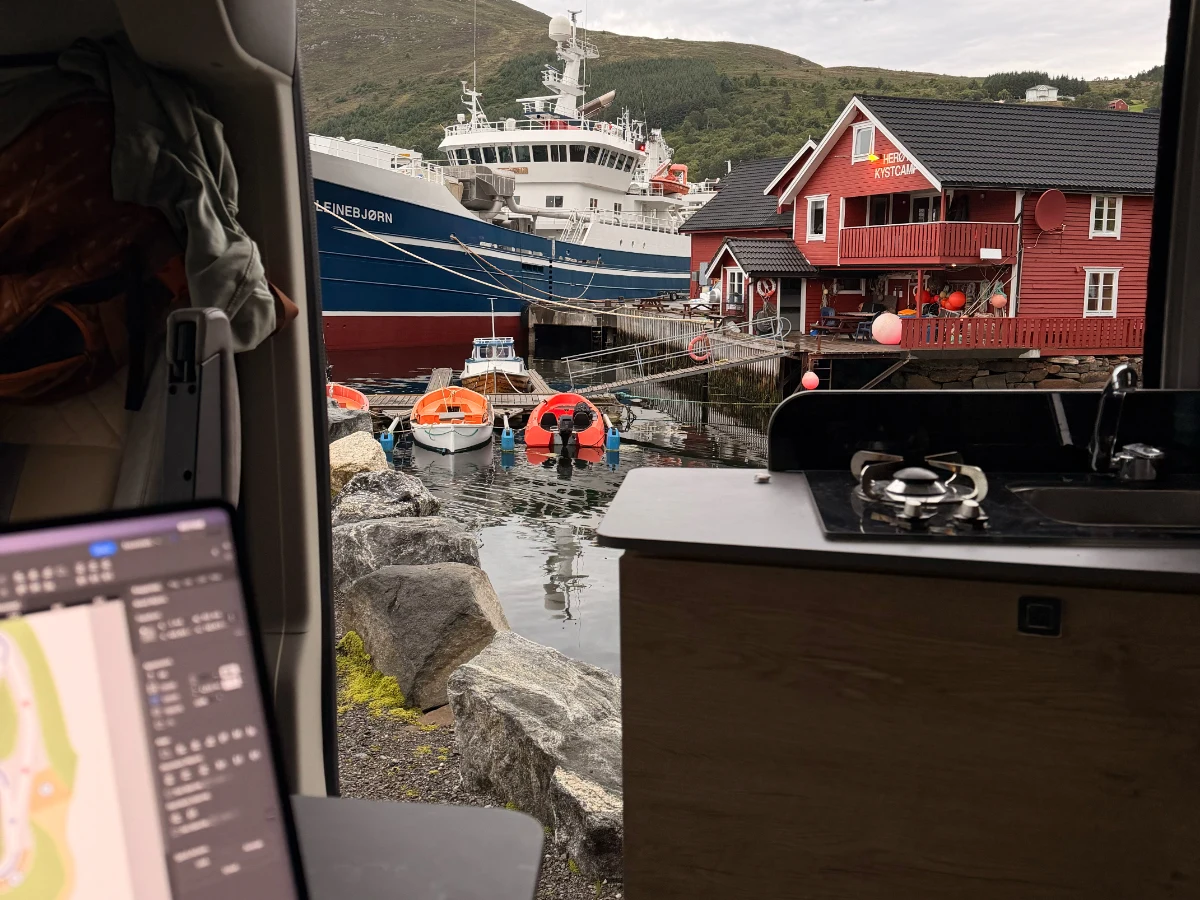
What worried her and what turned out to be a smaller obstacle than she expected
Size of the campervan
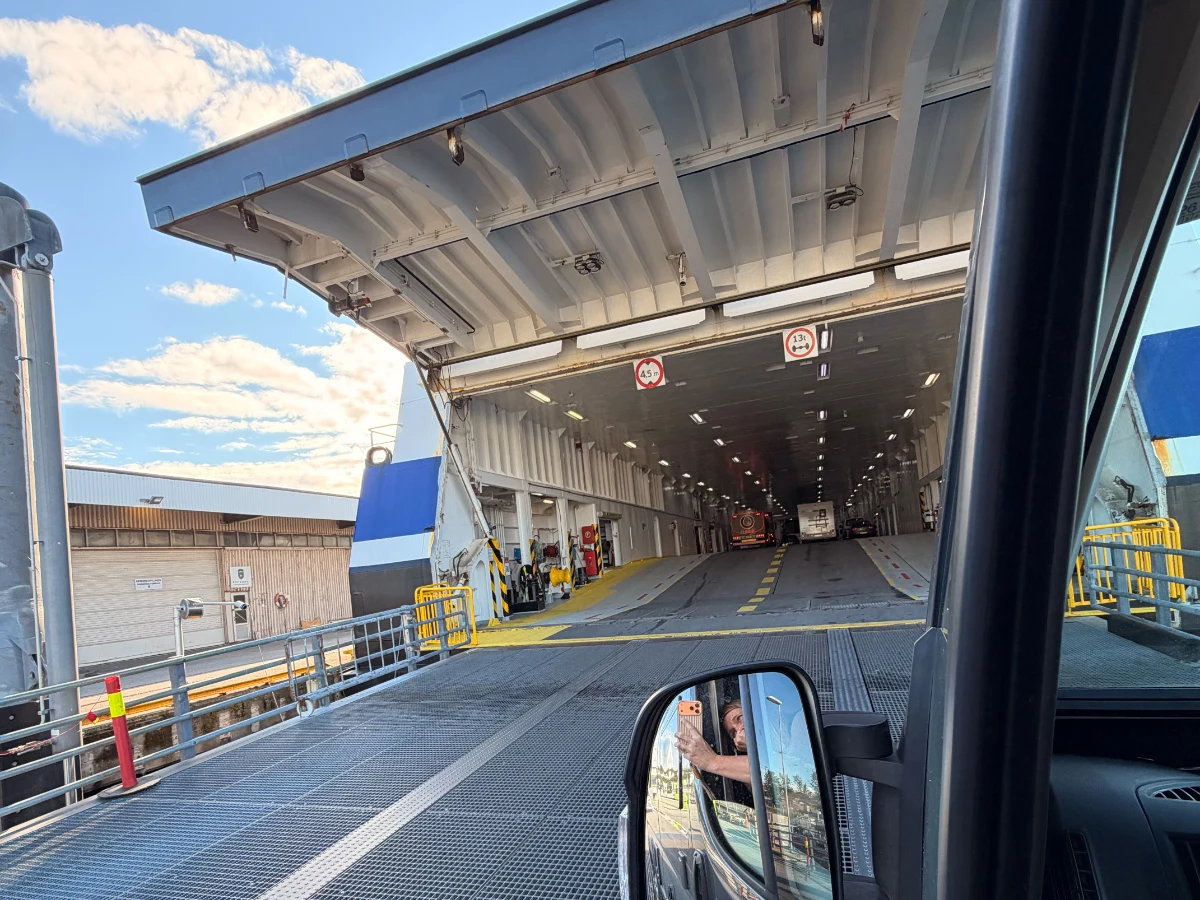
The Helios is six metres long. Urša describes it as just the right length to move easily on roads, in car parks and on ferries. Before the big trip she felt some apprehension, since a van is not something she would drive every day. So she took a test trip of a few days along the coast of neighbouring Croatia, in an Ares, which is half a metre shorter. When she drove the larger Helios she did not notice the difference at all. She did appreciate the extra room inside, especially in the bathroom and kitchen.
Also worth reading: in Why families fall in love with Robeta, one of the families also highlights the Helios as an ideal campervan because of its compact length.
Transporting the bike
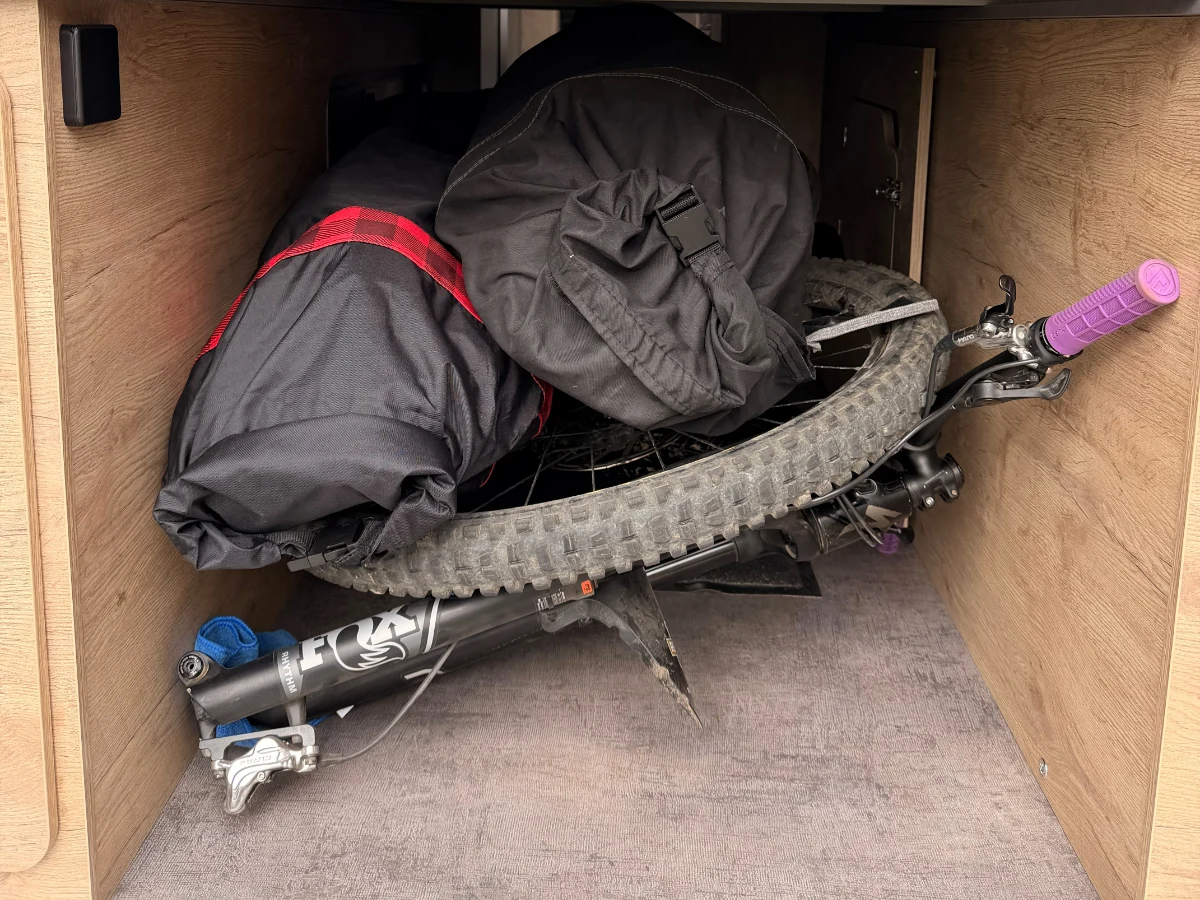
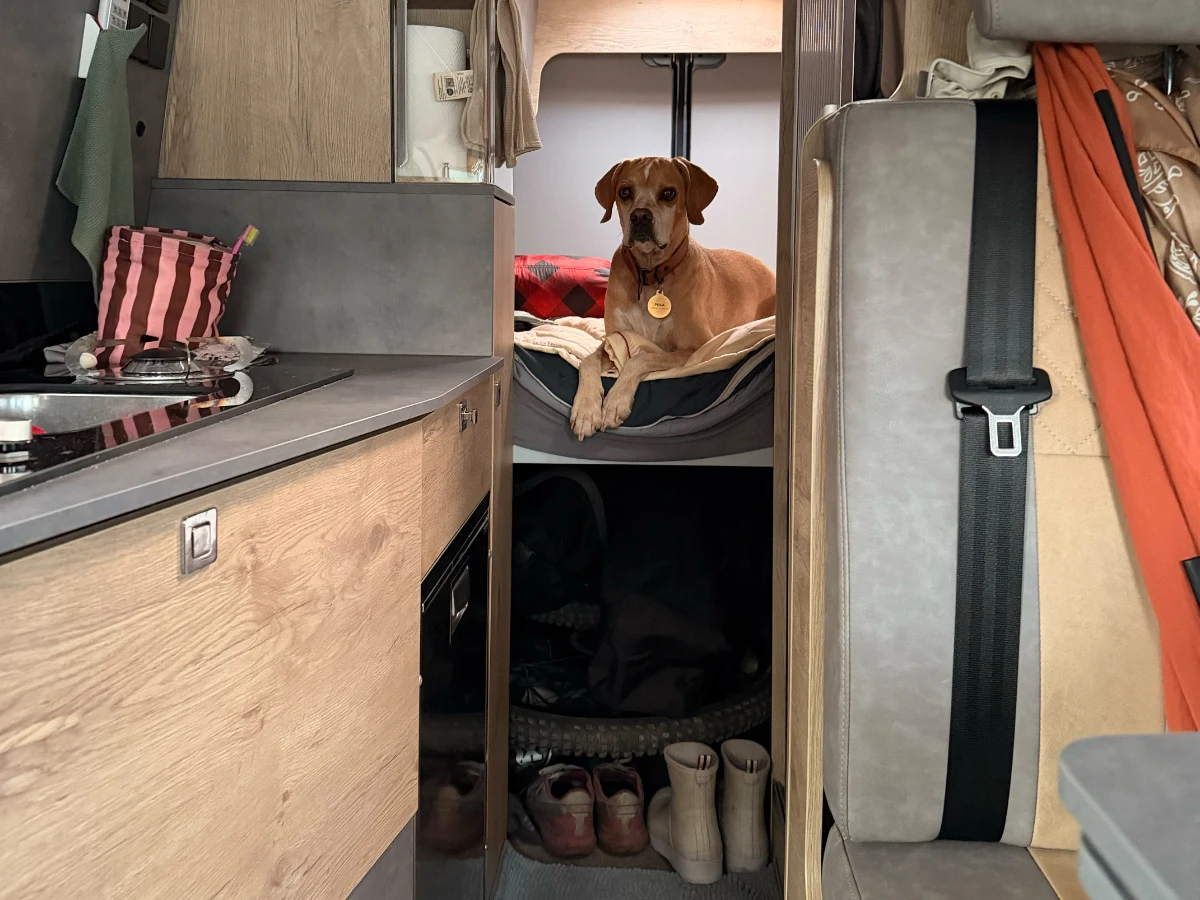
What worried her most was whether her mountain bike would fit inside the campervan. Because of the long journey, she did not want to carry it on an external rack. With a little adjusting she managed this too: she took both wheels off the bike and stored it in the luggage space under the bed.
Driving the campervan
At the wheel she found her feet quickly.
“I found it easier to get used to the van than to my own car again once I got back.”
The seating position and the view of the road are, in her words, better than in many cars. The reversing camera helped a lot when reversing, but she missed parking sensors. If the campervan had an automatic gearbox, driving would be even easier.
For Urša, though, driving was not only a question of how she would handle the van. She also wondered whether she could manage such a long journey alone: it took a week to reach the Lofoten Islands, and the whole trip covered almost 9,000 kilometres. This is how she approached it:
The long German motorway stretches were both the easiest and the hardest. She set the cruise control to 111 km/h, so driving was simple, but the kilometres dragged on.
In Norway she stopped counting kilometres and counted time instead. She allowed herself a maximum of four hours of driving a day, with some days longer and some shorter.
She listened to music and podcasts through her own speaker instead of the radio. Her phone sat on the console as a navigation screen, because Google Maps showed her the speed limits and her speed as well as the route.
Driving on narrow roads
On narrow roads, Urša says it pays to think ahead.
“There is always room for two sensible people. The problem is when that scenario does not work out.”
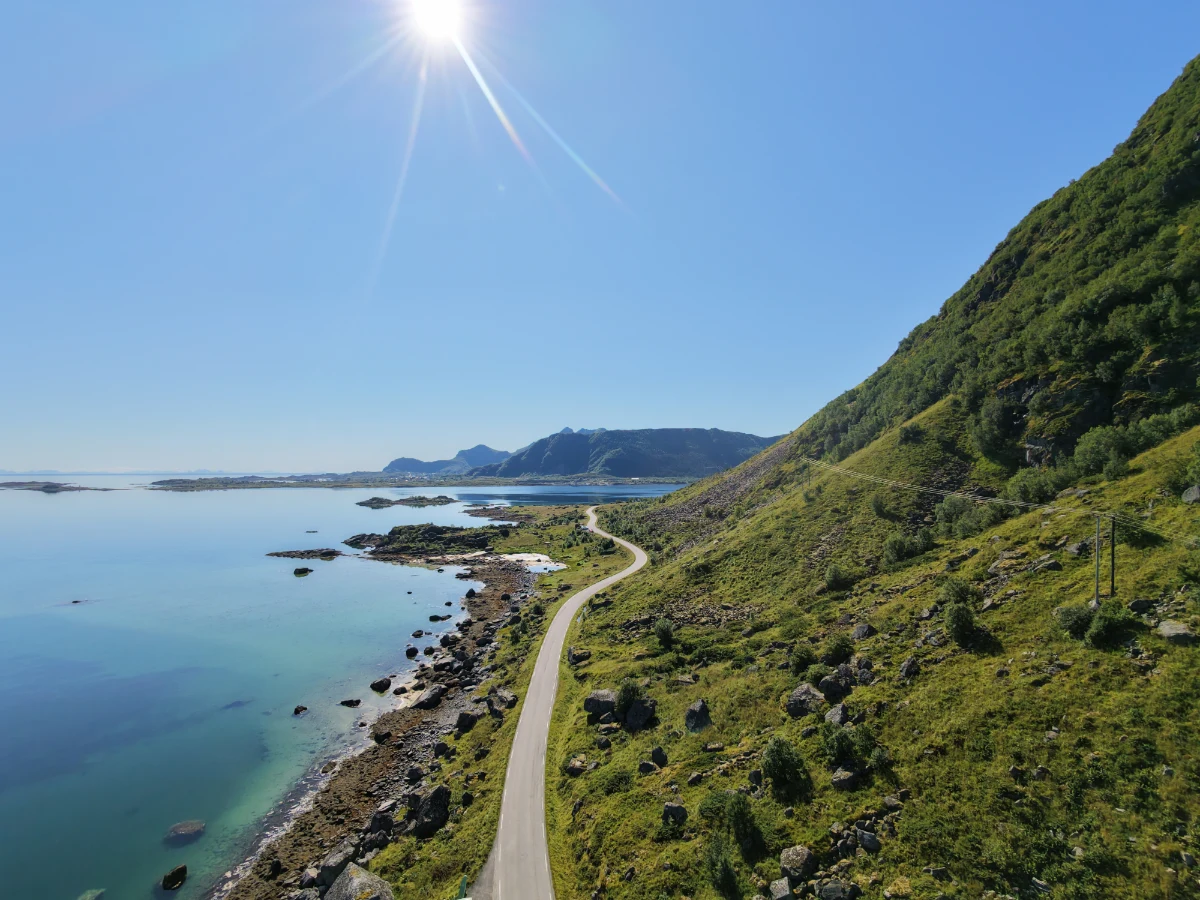
On narrow roads like those on Senja, passing places are frequent. If you judge that you are wider than an ordinary car, stop and wait for the oncoming vehicle to pass. She also advises tourists who drive below the speed limit because the scenery is so beautiful to check the rear-view mirror often and let faster traffic go by.
What was better in a campervan than in a tent
Urša points above all to the comfort that a car with a rooftop tent does not have:
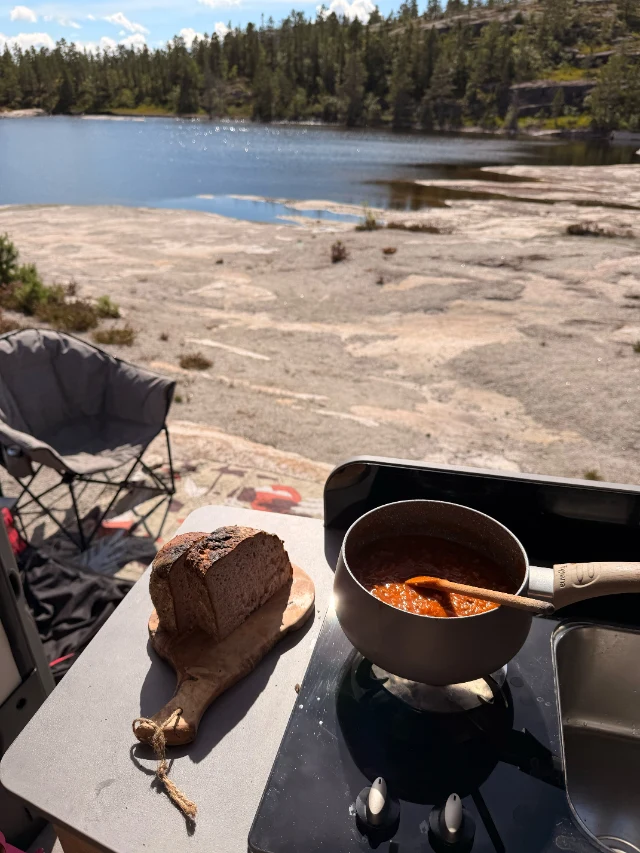
A kitchen with a fridge. She stocked the cupboards with food and drinks. In the freezer she had three portions of stuffed peppers from her mum, which she ate in three days in Norway to make room for cinnamon rolls, “the best way to bring home a little taste of the north”.
A bathroom with a shower and a toilet. In her words, this is the biggest difference in comfort: a car with a tent on the roof definitely does not have it.
A place for everything. Clothes in the cupboards, and a large cupboard next to the kitchen that served as a place for dirty laundry.
No problems with humidity. Based on her rooftop tent experience she worried about humidity in the van, but she truly had no such problems.
Washing and drying. She had no trouble drying washed laundry in the campervan either. She strung a line across the whole van, the campervan turned into one big drying room, and everything dried relatively quickly.
The comfort was most noticeable when the weather turned bad.
“And yes, when it rains outside, you are truly grateful for a roof over your head and a space where you can warm up, cook lunch, read a book or use the day to work remotely.”
Asked when she thought that a campervan was worth it, she listed several moments:
“In bad weather. When I was cooking with a beautiful view. When I pulled a chair out of the garage and set it up in front of the van. When I took a cold drink out of the fridge. When I could cover all the windows and go to sleep in the dark while it was still light outside (at 23:30).”
What was better with the tent
Urša does not hide that the tent has its strengths too. With the car she is more mobile, perhaps a little faster, and the driving is more comfortable. In her view, though, that does not outweigh the advantages of the campervan.
Weekend getaways are easier with the car and the tent, because you simply go. A campervan that you rent takes more preparation. She spent one day loading it before the trip and two days emptying and cleaning it afterwards. With the tent she has none of that logistics, because she carries noticeably less. When it comes to setting up and packing away camp, there is hardly any difference: with the tent there is a little more work in the car, and in the campervan it is the things inside that have to be put away before driving.
“Both are good. Each way of travelling has its advantages and disadvantages.”
Travelling with a dog
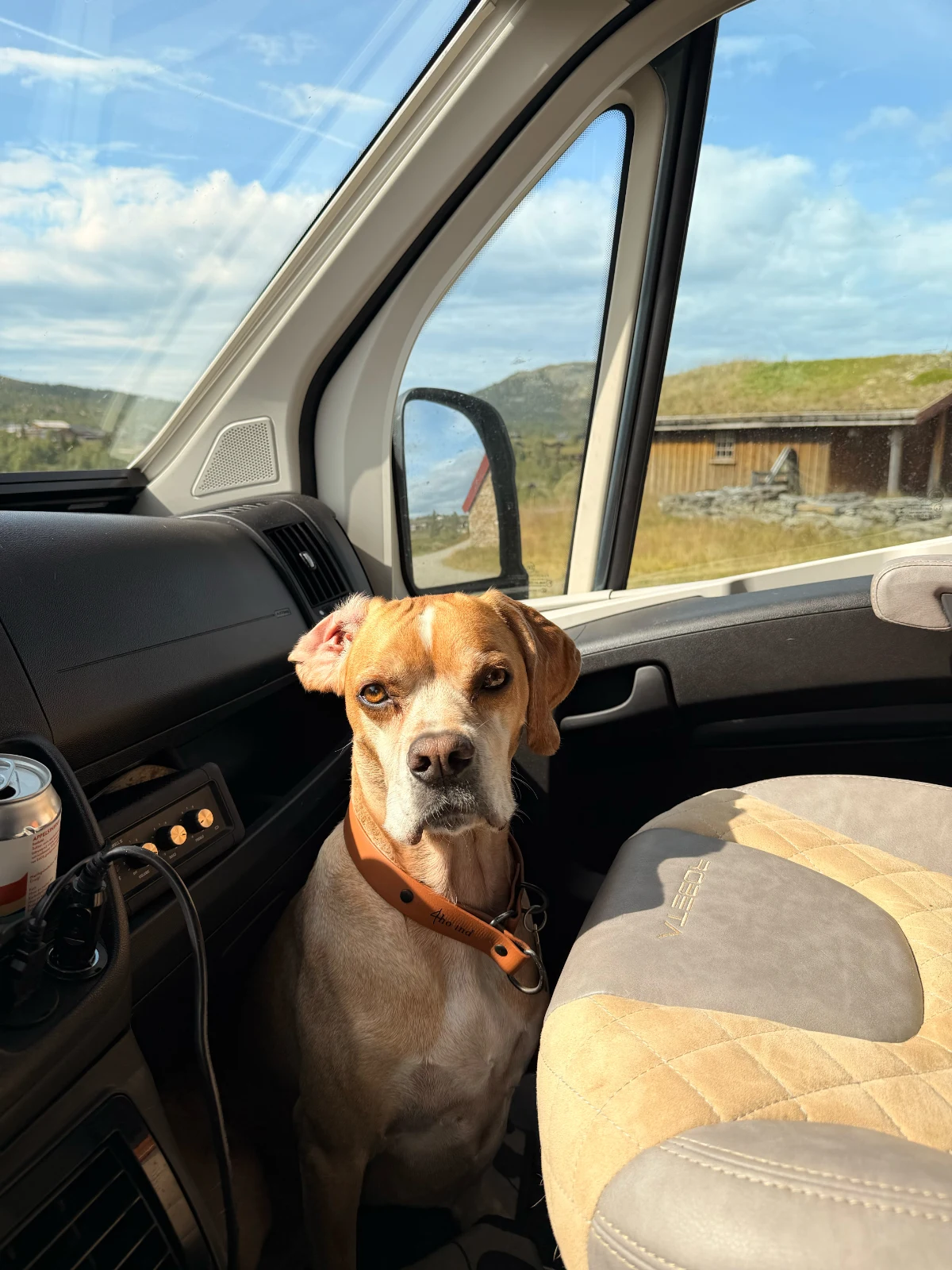
Her dog Pega had more room in the campervan than in a car. While driving she slept in her own bed under the table, behind the driver's seat. For future travellers with a dog, Urša recommends bringing a few extra towels and a cordless vacuum cleaner, because life is easier in a cleaner campervan.
The campervan also made things easier when the dog could not come along. When she went mountain biking in bike parks and explored the streets of bigger cities, she left Pega in the van. She made sure it was parked in a quiet spot, opened the roof vents, shaded the windows and left water out. In her words, a car heats up in the sun much faster than a campervan, and a campervan also allows better ventilation. She adds that this is not a practice for really hot summer days, when leaving a dog in a campervan would be out of the question. For her trip to the north, it was an excellent solution.
One more tip from experience: put away anything that might shorten the dog's waiting time. On the ferry, Pega helped herself to her own dry food, which had been stored in the bathroom. In Denmark, while waiting for Urša to come back “home”, she got through her owner's breakfast, snack and presents for friends, about five cinnamon rolls.
Travelling alone as a woman
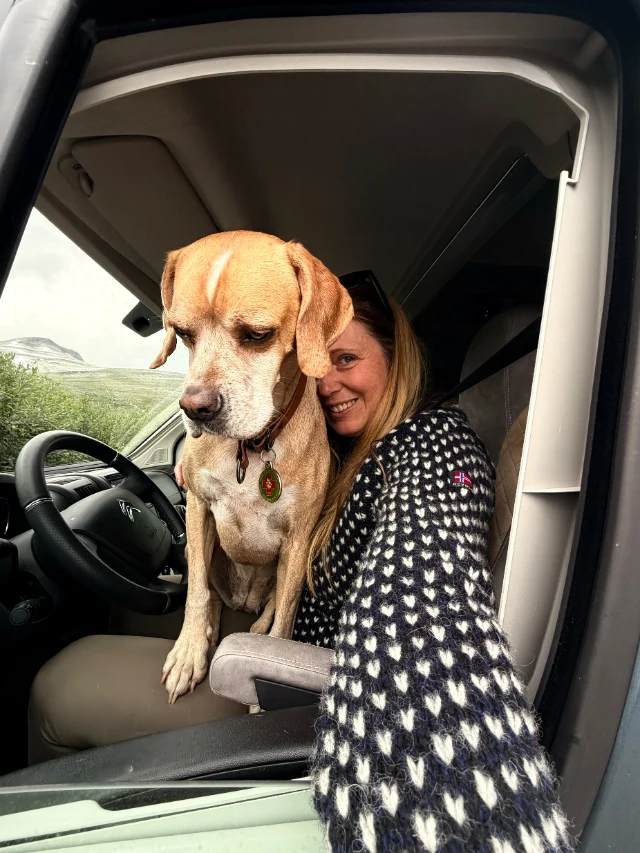
Urša spent many nights in remote places. With a tent on the roof, she says, it is hard to hide the fact that you are sleeping up there. In a campervan it is different.
“In a campervan it is much easier: when you draw all the blinds, nobody really knows whether you are at home or not.”
She admits she felt “perhaps even too safe”: somewhere along the way she had to remind herself consciously that it would be wise to lock the door before going to sleep. It also helped that she travelled with a dog, who would warn her if anything strange happened around the van. Her sense of safety came mostly from planning ahead: she always arrived at her chosen spot in daylight.
Before the trip she doubted whether she would manage. Friends who encouraged her by phone all the way helped. One of the best pieces of advice she received:
“Just go for it. If it isn't okay for you, simply turn around. You'll always be only a day or two away from home.”
That was not quite true once she was in the far north, but it helped anyway.
In her estimate, about 95% of the people driving campervans in Scandinavia were women. What did that mean to her?
“It's a great feeling when you see that you're not the only badass babe who can drive big vehicles far from home.”
When things got tough, she stopped and went for a walk. When she felt lonely, she called friends, posted something nice on social media or got creative.
For anyone, and especially for women, thinking about travelling alone, she has a short message:
“Just go. First somewhere nearer, somewhere familiar, and then simply put your feet on the path, or rather your wheels on the road, because life is far too short for us to wait for someone to drive the van when we can drive it ourselves.”
What impressed her most about Robeta Helios
Urša highlights three things:
Build quality. In her words, you can see that Robeta cares a great deal about it. The seats are really comfortable, the materials are high quality, and “nothing creaked or rattled while driving”.
Support. Having a team you can always rely on is crucial on a trip like this. Nothing went wrong this time, but it was “a great feeling to know that someone was always there to advise me how to solve problems”.
Thoughtful design. “Every centimetre of the campervan is used sensibly”, from the worktops to the cupboards. What stayed with her most was the extra drawer in the garage for larger things that are not in everyday use.
She also praised the bathroom. The layout of the toilet and shower was really good, and the room was large enough to turn around in normally and to store things in when not in use.
What surprised her most was how quickly she got used to it.
“After the first few kilometres it felt like this was it and had always been this way.”
If it were her campervan: a configuration to Urša's measure
If she were buying a Robeta and configuring it herself, Urša would choose the following:
A higher bed. It would make it easier to store her bike underneath. Robeta's team would recommend the Active Edition, which has a lift-up bed at the rear for easy loading of a bike and other sports equipment underneath.
An outdoor shower. She did not miss it this time, but in warmer places it would come in handy, especially if you are not a fan of cleaning the bathroom after every shower.
Energy. She carried a portable battery to charge her bike. The campervan's batteries charged while driving, as she was on the road almost every day. If she stayed longer in one place, she would need solar panels.
Diesel heating. In her view it makes more sense, especially in places where gas bottles are not refilled in the same way, such as Norway.
Extras. An oven or an air fryer would come in handy. Robeta already offers an air fryer as optional equipment in the new Hercules. For her next trip she is thinking about Starlink.
A lift-up roof. She does not need one, unless she turned the garage into an office. A bed on the roof would then be more of a spare sleeping place than the main one.
For the dog. In principle a crate would be great, but there was no room for one this time.
Would she choose a different model?
“I need to try something else so that I can compare.”
What she would do differently
She was happy with how she prepared for the trip, and in her words nothing was really missing. If she went again, she would change a few things:
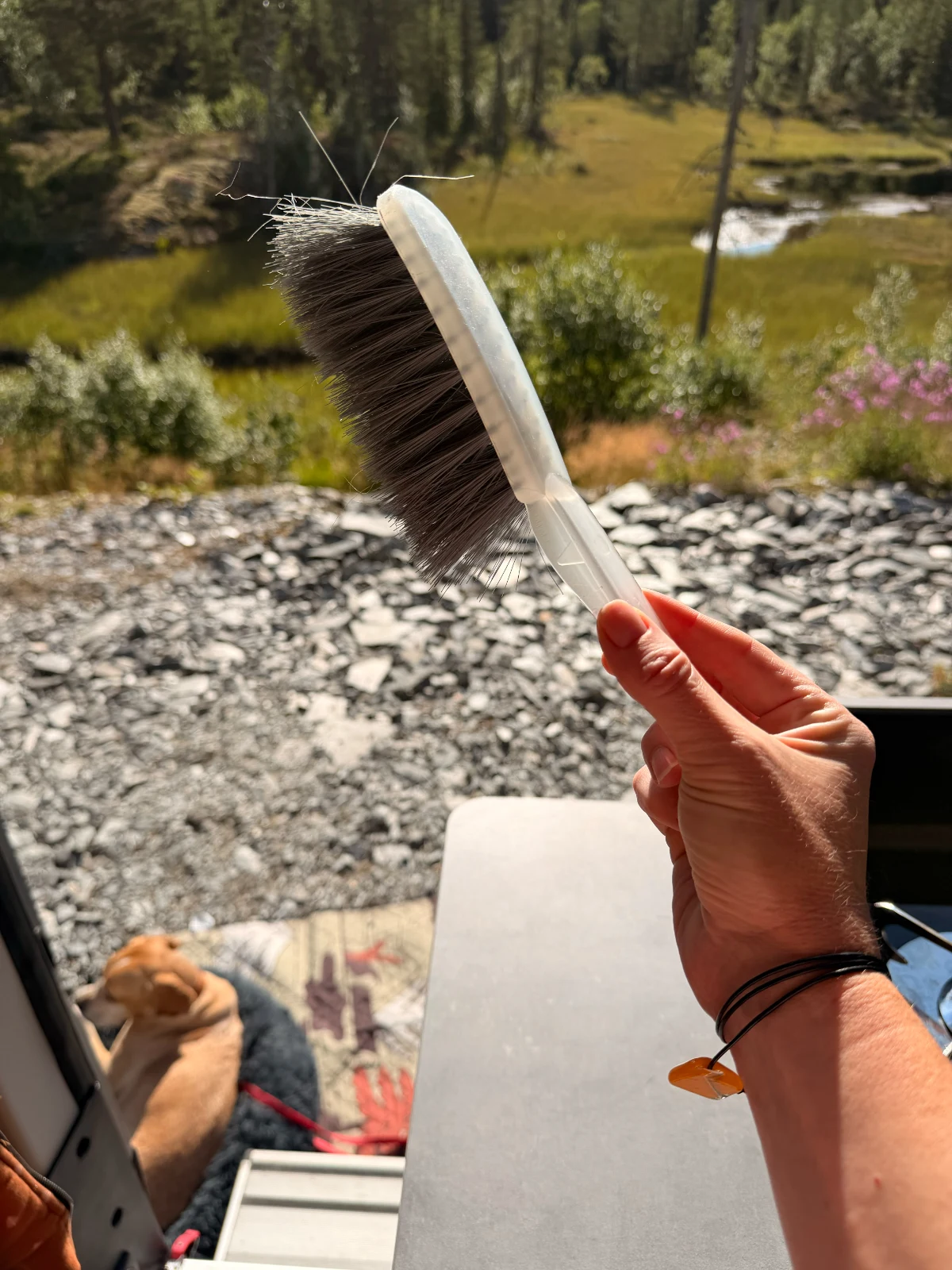
She would take a cordless vacuum cleaner and a small pressure washer (a Kärcher) for washing the dog and the bike.
The hammock she brought was unnecessary for the trip to the north.
One thing could be better from a technical point of view: the drawer closing. Despite being careful and making sure all the catches were shut, a drawer still slid open while she was driving.
For a trip like this she would take at least one or two more weeks. She would not change the route, only spend more time on each part. In her words, this year's trip was a scouting trip, and next time she wants more time for individual regions of Norway and Sweden.
Asked whether anything in the campervan was impractical, she answered briefly:
“It can't tidy itself up.”
Buy or rent?
Urša would rather buy a campervan. That way she would avoid constantly loading it before every departure and emptying it after coming home. If you own one, it is partly stocked all the time: you bring only what you need and go.
At the same time she is honest about the cost. Owning a campervan is a bigger expense. If a campervan trip is just one of several ways you holiday, for example a rented apartment in Croatia or a flight to Malta, renting is in her view the better move.
She summed up her experience in one sentence:
“Freedom that you can buy and will not regret.”
Advice for a first trip: cyclists and couples
For cyclists and couples choosing a campervan for the first time, Urša recommends renting one for the 1 May holidays (a public holiday period in Slovenia) and escaping to Tuscany or Lake Garda. Before her big trip she herself first tried the driving for a few days on the Croatian coast. Her point travels well: start close to home, in a region you know.
“Italy is a really great opportunity to get to know life in a campervan and to discover all the freedom this way of travelling gives us.”
Thinking about your own Robeta?
>> Build it in the configurator
Prefer renting it first?
>>> Rent a Robeta through Vantrip
Want the full route?
>>> Read more about Urša's trip from Ljubljana to the Lofoten islands